Diving deeper into the games Britannia series, here we learn about the Joystick generation, the birth of the commercialisation of video games we know today. Benjamin woolley starts us off by talking about his childhood ant how he loved Tolkiens: Lord of the Rings book, the fact that he loved the idea of adventure and the map in the back of the book. This thirst for adventure brings him to playing a game called Dungeons and dragons, where he first experiences a taste for this adventure. He suggests that these games are appealing as "they open up a story" "add an interactive dimension which allows you to explore a fictional terrain."
The first computer game Woolley encounters is a game called Elite, it was a pioneering videos games. its opened up the way video games were made. The programme then explores Black and White, a game based on compulus, where you play as a god role and use a hand to control the world, however this may be the case, you may be the god and control everything, but the little people are actually the controllers as they all need homes, something to eat, somewhere to live, they need your help with most things, so really the people roaming the game are in charge.
Lara croft was one of the most revolutionary games of the time, it was one of the first games to put a personality and a face onto a game character. This games makes the player feel responsible, similar to a god game, it makes you feel and care for the character you are playing.
The typical Grand Theft Auto is also reviewed by the programme, suggesting its moral destroying behaviours. Woolley suggests that this game blurs the morals of us as human beings. This game relishes its role as a rebel, it draws from many other famous games and their niche features.
The development of Multi-User Dungeon paved the way to social gaming, many games are mostly multiplayer. All gamers enjoy playing games, but enjoy playing games with other people even more. The multiplayer games market is the equivalent of the the way board game brought players together. Socialising and playing together is the most effective form of gaming.
Showing posts with label Games. Show all posts
Showing posts with label Games. Show all posts
Monday, 26 March 2012

Sunday, 15 January 2012
Why we play games: Natural funativity. Noah Falstein
'Fun' is a word used to describe a source where we can receive enjoyment from. Fun can be hard to describe, but we know when we have experienced it, regardless of how hard it is to describe.
Paleolithic pastimes:
As humans, we have a strong dependency on social interactions with one another. This also leads to another dependency that we need. An establishment in our families and the ability to maintain this place in our families.
(RSS) Refined Sugar Syndrome is a theory that considers the way we behave towards things that give us pleasure. As humans in our past history we have always strived to get more of the things that taste sweet in this world. Sugar being a natural substance found in fruit, as ancient beings we found the sugary fruits and treasured them. However nowadays we have been able to produce a concentrated form of this substance. This is now true with the act of play, we have taken the simple act of playing and turned this into a concentrated source that is a video game. Our ancestors played games as a form of entertainment and as a way to keep their survival and hunting skills sharp and a constant improving.
Physical fun:
One of our primary urges as human beings is the survival instinct, anything that threatens our survival automatically commands our full attention and awareness. Games tend to tap into this theme to capture players and immerse them further into their games. As this urge is an automatic instinct, players find it hard to ignore, its built into our mind set. This can be considered to the whole mass entertainment media. Even films put viewers in a state of mind of survivability to capture their attention. This physical fun relies on strong muscles and good coordination. A theory as to why sports are popular, these often focus on physical strength and team cooperation. These activities go back in our history as they are similar to the hunting and surviving instinct of our ancestors.
The article mentions why many game items can easily be relevant toward our ancestry.
Casinos - Berry picking
Collectible games - Gatherers
RTS,RPG,FPS - Travellers/discovery
Weapons/hand tools - Stone tools
Social fun:
Games bring people together, it creates a ground for us to build social interactions and increase the development of language. It has also given us an indirect way of learning and increasing the ability of our process of improving our survival instincts. The existence of storytelling shows that our ancestors enjoyed or at least had the desire to communicate and socialise with each other.
MMO's can create the basis of socialisation from many different features in the game. Chat rooms can open up where people discuss experiences and such they have had in the game. The media is constantly expansive which then create more social interaction. A reason why many people play these games and a reason why many game developers focus on this aspect of their games.
Mental Fun:
Games that challenge us mentally, lure some players in just for that challenge. We have developed as human beings to have a large brain that holds so much information and this has given us the advantage of learning to survive and adapting over time. The constant expansion of our brains has given us quicker reactions, recognising patterns and important decisions.
Blended fun:
These games are smart as they use more than one of these natural funativity 'types' in their games to lure or attract in more than one type of gamer. Different gamers prefer different types of funativity, and so tapping into more than one type of funativity, they can gain a wider audience for their games.
All these types of funativity need to be considered when designing an original game that can be fun. However i never took the time to think how deep in history our instinct to have fun and entertainment were.
Paleolithic pastimes:
As humans, we have a strong dependency on social interactions with one another. This also leads to another dependency that we need. An establishment in our families and the ability to maintain this place in our families.
(RSS) Refined Sugar Syndrome is a theory that considers the way we behave towards things that give us pleasure. As humans in our past history we have always strived to get more of the things that taste sweet in this world. Sugar being a natural substance found in fruit, as ancient beings we found the sugary fruits and treasured them. However nowadays we have been able to produce a concentrated form of this substance. This is now true with the act of play, we have taken the simple act of playing and turned this into a concentrated source that is a video game. Our ancestors played games as a form of entertainment and as a way to keep their survival and hunting skills sharp and a constant improving.
Physical fun:
One of our primary urges as human beings is the survival instinct, anything that threatens our survival automatically commands our full attention and awareness. Games tend to tap into this theme to capture players and immerse them further into their games. As this urge is an automatic instinct, players find it hard to ignore, its built into our mind set. This can be considered to the whole mass entertainment media. Even films put viewers in a state of mind of survivability to capture their attention. This physical fun relies on strong muscles and good coordination. A theory as to why sports are popular, these often focus on physical strength and team cooperation. These activities go back in our history as they are similar to the hunting and surviving instinct of our ancestors.
The article mentions why many game items can easily be relevant toward our ancestry.
Casinos - Berry picking
Collectible games - Gatherers
RTS,RPG,FPS - Travellers/discovery
Weapons/hand tools - Stone tools
Social fun:
Games bring people together, it creates a ground for us to build social interactions and increase the development of language. It has also given us an indirect way of learning and increasing the ability of our process of improving our survival instincts. The existence of storytelling shows that our ancestors enjoyed or at least had the desire to communicate and socialise with each other.
MMO's can create the basis of socialisation from many different features in the game. Chat rooms can open up where people discuss experiences and such they have had in the game. The media is constantly expansive which then create more social interaction. A reason why many people play these games and a reason why many game developers focus on this aspect of their games.
Mental Fun:
Games that challenge us mentally, lure some players in just for that challenge. We have developed as human beings to have a large brain that holds so much information and this has given us the advantage of learning to survive and adapting over time. The constant expansion of our brains has given us quicker reactions, recognising patterns and important decisions.
Blended fun:
These games are smart as they use more than one of these natural funativity 'types' in their games to lure or attract in more than one type of gamer. Different gamers prefer different types of funativity, and so tapping into more than one type of funativity, they can gain a wider audience for their games.
All these types of funativity need to be considered when designing an original game that can be fun. However i never took the time to think how deep in history our instinct to have fun and entertainment were.
Games Britannia Part 2 of 3: Monopolies and Mergers
 Following on from the previous episode, here Benjamin Woolley shows us the influences of board games over the last 200 years on British society and how they have developed into game that can become a moral teaching for many people.
One of the games that stood out for me in the programme was a game titled The landlords game, it was a board game invented and patented by Elizabeth Magie in 1904. The game was supposedly designed to explain to people how the 'land grabbing' and renting system worked. It was also used to provoke children to gain an awareness over unfairness, hopefully taking this new awareness into adulthood. This game was first published in Great Britain in 1913 with the title Brer Fox an' Brer Rabbit, this game later was the major influence that then created the most popular board game in history - Monopoly. The similarities can easily be seen, but the versatility of this game was that each place on the board can be changed by naming them differently, a feature that has made the current monopoly so successful. Depending on the place of sale, the board can have specific place names that are popular to the place of sale.
 After this point, family board games were being produced to bring families through the Great depression, Cluedo and scrabble became a popular family game during this time, these them started to form the biggest game companies at the time, some even are around now, producing the same games.
But since then not much has changed in the content of board game, but they are just not as poular as they used to be. New board games such as War on Terror by Trrorbull games have similarities to Brer Fox an' Brer Rabbit as they both contain content in which relates to the current world, it was designed to give people the chance to see why countrys do what they do to acquire countries and land, and how much cheaper it is to fund terrorism. This is mainly just a play on satire, but the game company are finding it hard to find suppliers that will stock such a sensitive game.

The final part of this series, Woolley will be looking at the 'Joystick generation' and viewing how videogames have affected us as Britains.
Wednesday, 11 January 2012
Why We Play Games: Four Keys to more more Emotion without story
Why do we play games? Well we play games to change or structure our internal experiences, these experiences create an emotional impact on ourselves as the player. Emotions are important to human beings as it is a way of expressing ourselves and to communicate to other human beings. Many games use tools in order to create challenges for player to overcome, as these challenges are attempted it can create a variety of emotions such as frustration and anger, but the reward of completing these challenges can be relief and happiness. This happiness can be that breakthrough people play to step into their own fantasy world and escape their everyday life. XEODesign are a company the specialise in player experience research and design for mass market interactive entertainment. Here they have constructed a field study upon 30 different players of many different games in order to find out what makes them tick and what makes them want to play games. Over playing a variety of games they came up with a set of Keys to emotion with story:
Hard Fun:
Players mostly players as an attempt to overcome obstacles. Hard fun is a way of creating emotions by structuring the players experiences towards them pursuing a goal. This mainly focuses on the reward factor of the goal is achieved. This technique can amplify frustration and passion for completing goals, players enjoy the relief from frustration and this one reason why people play. Hard fun can attract people who enjoy a challenge and often say things like:
This type of fun attracts players who just play for the sheer enjoyment of the experience of playing the game. This enjoyment often uses the sense of curiosity which entices the player to delve deeper into the game world. The sensation of wonder and shock often lures these players into the game. They often have a short attention span so adventurous games keep them satisfied. These players often use these words to describe their reasons for playing:
These type of people play games that generate emotion with perception, thought, behaviours and playing with other people. A majority of people confess they play games because it makes them feel better about themselves, these games are used to move players from one mental state to another. Players who receive enjoyment from these mention that:
These games create opportunities for player interaction and competition. These players often play just for the social aspect of the game. Players will even play games they dont like just because they enjoy socialising with the people who play. Tempers can flare and jokes can be thrown but its all part of the game. These players often feel that:
Some people don't want to play games as they value other things in life with a higher valued responsibility such as jobs or raising families. Some never want to play again because they know that games can become addictive and develop bad habits. Some even regard games as against their morals.
"I won’t play his games, because someone has to take care of the kids!” –Wife of a Hard Core Gamer
- Like: What players like most about playing
- Emotion: Creates unique emotion without story
- Games: Already present in ultra popular games
- Theory: Supported by psychology theory and other larger studies
Hard Fun:
Players mostly players as an attempt to overcome obstacles. Hard fun is a way of creating emotions by structuring the players experiences towards them pursuing a goal. This mainly focuses on the reward factor of the goal is achieved. This technique can amplify frustration and passion for completing goals, players enjoy the relief from frustration and this one reason why people play. Hard fun can attract people who enjoy a challenge and often say things like:
- I play to see how good I am
- I play to beat the game
- I play to have multiple objectives
- I prefer using strategy rather than luck
This type of fun attracts players who just play for the sheer enjoyment of the experience of playing the game. This enjoyment often uses the sense of curiosity which entices the player to delve deeper into the game world. The sensation of wonder and shock often lures these players into the game. They often have a short attention span so adventurous games keep them satisfied. These players often use these words to describe their reasons for playing:
- I play to explore new worlds with intriguing people
- I play for the excitement and adventure
- I play because I want to figure the story out
- I play because I want to see what happens in the story, even if I have to use a walk through
- I play because me and my character are one
- I love the sounds of the cards shuffling
- I play because of the growing dragons
These type of people play games that generate emotion with perception, thought, behaviours and playing with other people. A majority of people confess they play games because it makes them feel better about themselves, these games are used to move players from one mental state to another. Players who receive enjoyment from these mention that:
- They enjoy letting the game clear their mind by clearing a level
- They feel better about themselves whilst playing
- They play to avoid boredom
- Being better than someone at something that matters
These games create opportunities for player interaction and competition. These players often play just for the social aspect of the game. Players will even play games they dont like just because they enjoy socialising with the people who play. Tempers can flare and jokes can be thrown but its all part of the game. These players often feel that:
- It's the people who play that are addictive, not the game itself
- I want an excuse to invite my friends over for some games
- I don't like playing games, but its a fun way to spend time with my friends
- I don't play, but it's fun to watch.
Some people don't want to play games as they value other things in life with a higher valued responsibility such as jobs or raising families. Some never want to play again because they know that games can become addictive and develop bad habits. Some even regard games as against their morals.
"I won’t play his games, because someone has to take care of the kids!” –Wife of a Hard Core Gamer
Wednesday, 19 October 2011
Games Britannia, part 1 of 4 "Dicing with Destiny"

Stepping even further back into history, Woolley learns of a game found in many religious cults and beliefs. A game known as Alea Evangelii was supposedly a game that was used as an educational tool to educate followers on the process of life. This game was believed to of been played at 400AD. At first many religions frowned upon playing games, but as the documentary progressed Woolley found that there was a game that was played during church ceremonies. This game was called Nine Men’s Morris and was played quite noticeably in the religious building in the past. It is a game similar to Tic-Tac-Toe where when a player lines up 3 of his stones, then you were allowed to remove one of the opponent’s stones until there is none left. This game is played on a set of 3 squares and so was easily scratched into stone, floors and even ceremonial grave stones. The religions didn't mind this for some reason as nowadays, games are considered bad by religions unless the game actually teaches the players morals and understandings. Particularly if games contain dice/dies, many religions saw the dice as a devils game as you are pretty much relying on chance and luck, which is exactly the opposite of what religions wanted in their games. Saying that though leads me onto why we as human being invented games.
Animals in the animal kingdom play around with object as do we, but on the human being has the ability to craft the simple act of play into a game which contains rules and structure to challenges ourselves. And why do we do this? Because we get bored! Humans get bored and so turn simple play into games in which we can compete with each other at. Many of the first instances of games began in the East in Asia/India and were brought over and manipulated to our requirements in
This is all the detailed notes I wrote about part one of the Games Britannia series and so I come to the conclusion that if you are a fan of history or board games or both, then you should try and get this video someplace as I found it extremely interesting.
"Dicing with Destiny" Games Britannia 2009 [TV] BBC4, December.
Thursday, 6 October 2011
Greg Costikyan's theory as to the definiton of a 'game'
Greg Costikyan Wrote a famous article in 1994 about defining a game as a whole and since then the article has been been revisited and has been changed dramatically since, although the main concepts and ideas still remain. After reading this article I have been asked to explain my thoughts as to how much I support the quote from Costikyan that:
'A game is an interactivestructure of endogenous meaning that requires players to struggle towards goals'
Greg Costikyan (2004:24)
So Buckle up, I will TRY to keep this brief, I have 5 pages of notes, I cant promise anything.
Well first of all I totally agree with Costikyan , the fact that the 'struggle' incorperated into the structure of the game in fact give the game its excitement and playability and also one major factor that game designers specifically want is re-playability. One term or metaphor Costikyan used in this article is 'plastic games,' games which can mold certain characteristics of play in order to become a struggle in many degrees. A puzzle is a game which mostly is just a challenge, this challenge being completed can either rely heavily on your mathematics skills, knowledge skills or even borderline to the games definition, your motor skills. Puzzles are considered to be static as they have a logic structure with a set outcome which depends on you completing the puzzle with the set rules, however a game is an adaptive structure which can change depending on the player interactions. This is now the showings of a struggle and that a costikyan explains that games have puzzles incorporated into them, they are often just harder to see when you're subconsciously affixed to the game. Here's a game example which has a typical puzzle element inside it:
A wave of zombies are slowly coming after you (I know, so cliche) and you have a certain amount time to wipe them out before they eat you for breakfast. Now seeing as they would be coming from all directions gives you the puzzle element. If I move my position to here and then time my grenade a few seconds after i could wipe out several of them in one go. This is the puzzle element of the game, you the player have to consciously pick the right moment out of however many seconds you have to then earn a collateral kill ending the round quicker. These small calculations occur through many, many games and I would arguably support this instance that most 'regular' games have many puzzle elements to them.
 Interactive and structure tie all of the main elements of a game down into the finally package. The way a board game is structured can be fixed due to the nature of a board being square or how many spaces it has, BUT being a player of the board game, they can collectively or if you're a cheat and do this solo, not take all rules into account or any at all. This is usually the case that the players of a board game can structure their own struggles to create a more pleasurable experience, lets for example take Monopoly by Parker Brothers. I know many people who in fact take the chance and community chest cards that cause you to pay the bank for every single property with a structure on them to the bank. It creates mass struggle between players and personally to me I find it a game maker/breaker card. The harsh reality that all that empire you have worked for has to be destroyed and paid for, but hey that's life and it shows that the structure and the interaction with the game instructions can create a a variable degree of struggle.
 This interaction of structure can be be very limited in digital games and the fact that game structure is pretty much fixed in a digital game. The most simple structure in a game is the factor of the choice of difficulty level in games. They can be chosen and set and can limit the amount of struggle that can be experienced for the player or players. Interaction between the player sometimes having a choice between the amount of struggle they experience can have it positive effect on notorious games. A game called DOOM for example it known for its extremities when it comes to level difficulties, it quite frankly 'sorts the men from the boys' and serious gamers see this as a huge boost to the urge to want to play and replay a game, however the satisfying feeling when you finish the game on the hardest difficulty with a super fast time can drive the player to want to replay and challenge friends. This struggle is created by the drive of us being human being to be successful and compete with each other. Which brings me onto goals and the fact that goals create struggle, and without goals, a game gets boring, pretty quickly.
 Goals I feel are needed in every game in order to captivate a player and to extend into the nature of a human being. The fact human beings are competitive and enjoy a challenge is a factor that game designers have picked up a lot recently. With the introduction of multiplayer games and the way goals can be achieved together as well makes this day and age finally catch up to the board game multiplayer experience. This being said this instance of challenge and struggle is a factor that keeps people playing, a game that Costikyan mentions quite often is the game Simcity, although it does not come with any goals whatsoever or any challenges and the fact that it has become successful is due to the fact that humans can become creative or destructive and its ability to 'survive' the games library of the world is down to the creativity and imagination of human beings.
This leads me on to explaining that these challenges and goals give the game purpose, and most importantly the player to desire to play the games. These challenges, struggles and goals are endogenous as they are designed by humans for humans. People can do as much research as they like as to what us as casual or serious gamers enjoy doing, and that's being challenged, some may like being defeated time and time again just to be rewarded with the credits screen, whereas some player just want to be become immersed during their tea break in order to forget about their day and problems. This is why I feel that Costikyans definition of a game precisely hits the nail on the head.
Tom Sharman
'A game is an interactivestructure of endogenous meaning that requires players to struggle towards goals'
Greg Costikyan (2004:24)
If anyone wants to view these treasures of articles, both variations are below.
Link to original the 1994 article
Link to revisited version of the article (2002)
'A game is an interactivestructure of endogenous meaning that requires players to struggle towards goals'
Greg Costikyan (2004:24)
So Buckle up, I will TRY to keep this brief, I have 5 pages of notes, I cant promise anything.
Well first of all I totally agree with Costikyan , the fact that the 'struggle' incorperated into the structure of the game in fact give the game its excitement and playability and also one major factor that game designers specifically want is re-playability. One term or metaphor Costikyan used in this article is 'plastic games,' games which can mold certain characteristics of play in order to become a struggle in many degrees. A puzzle is a game which mostly is just a challenge, this challenge being completed can either rely heavily on your mathematics skills, knowledge skills or even borderline to the games definition, your motor skills. Puzzles are considered to be static as they have a logic structure with a set outcome which depends on you completing the puzzle with the set rules, however a game is an adaptive structure which can change depending on the player interactions. This is now the showings of a struggle and that a costikyan explains that games have puzzles incorporated into them, they are often just harder to see when you're subconsciously affixed to the game. Here's a game example which has a typical puzzle element inside it:
A wave of zombies are slowly coming after you (I know, so cliche) and you have a certain amount time to wipe them out before they eat you for breakfast. Now seeing as they would be coming from all directions gives you the puzzle element. If I move my position to here and then time my grenade a few seconds after i could wipe out several of them in one go. This is the puzzle element of the game, you the player have to consciously pick the right moment out of however many seconds you have to then earn a collateral kill ending the round quicker. These small calculations occur through many, many games and I would arguably support this instance that most 'regular' games have many puzzle elements to them.
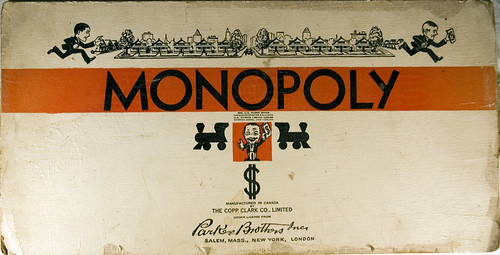 Interactive and structure tie all of the main elements of a game down into the finally package. The way a board game is structured can be fixed due to the nature of a board being square or how many spaces it has, BUT being a player of the board game, they can collectively or if you're a cheat and do this solo, not take all rules into account or any at all. This is usually the case that the players of a board game can structure their own struggles to create a more pleasurable experience, lets for example take Monopoly by Parker Brothers. I know many people who in fact take the chance and community chest cards that cause you to pay the bank for every single property with a structure on them to the bank. It creates mass struggle between players and personally to me I find it a game maker/breaker card. The harsh reality that all that empire you have worked for has to be destroyed and paid for, but hey that's life and it shows that the structure and the interaction with the game instructions can create a a variable degree of struggle.
  This interaction of structure can be be very limited in digital games and the fact that game structure is pretty much fixed in a digital game. The most simple structure in a game is the factor of the choice of difficulty level in games. They can be chosen and set and can limit the amount of struggle that can be experienced for the player or players. Interaction between the player sometimes having a choice between the amount of struggle they experience can have it positive effect on notorious games. A game called DOOM for example it known for its extremities when it comes to level difficulties, it quite frankly 'sorts the men from the boys' and serious gamers see this as a huge boost to the urge to want to play and replay a game, however the satisfying feeling when you finish the game on the hardest difficulty with a super fast time can drive the player to want to replay and challenge friends. This struggle is created by the drive of us being human being to be successful and compete with each other. Which brings me onto goals and the fact that goals create struggle, and without goals, a game gets boring, pretty quickly.
 Goals I feel are needed in every game in order to captivate a player and to extend into the nature of a human being. The fact human beings are competitive and enjoy a challenge is a factor that game designers have picked up a lot recently. With the introduction of multiplayer games and the way goals can be achieved together as well makes this day and age finally catch up to the board game multiplayer experience. This being said this instance of challenge and struggle is a factor that keeps people playing, a game that Costikyan mentions quite often is the game Simcity, although it does not come with any goals whatsoever or any challenges and the fact that it has become successful is due to the fact that humans can become creative or destructive and its ability to 'survive' the games library of the world is down to the creativity and imagination of human beings.
This leads me on to explaining that these challenges and goals give the game purpose, and most importantly the player to desire to play the games. These challenges, struggles and goals are endogenous as they are designed by humans for humans. People can do as much research as they like as to what us as casual or serious gamers enjoy doing, and that's being challenged, some may like being defeated time and time again just to be rewarded with the credits screen, whereas some player just want to be become immersed during their tea break in order to forget about their day and problems. This is why I feel that Costikyans definition of a game precisely hits the nail on the head.
Tom Sharman
'A game is an interactivestructure of endogenous meaning that requires players to struggle towards goals'
Greg Costikyan (2004:24)
If anyone wants to view these treasures of articles, both variations are below.
Link to original the 1994 article
Link to revisited version of the article (2002)
Subscribe to:
Posts (Atom)